Available courses

This course explores interconnectedness of the science of personal development, health and wellness, and career readiness that develops life skills for self-determination, adaptability, resilience, and leadership to engage responsibly in the workplace and community. It equips learners with personal, physical, social, and career development competencies in preparation for their transition to various pathways.  

This course introduces learners to the fundamentals of web design and website planning. Students explore how websites are structured, learn basic web-building concepts, and create simple web page layouts using wireframes. Through hands-on activities, they develop skills in organizing content, designing user-friendly interfaces, and applying visual design principles. Learners also explore digital collaboration tools and create web project prototypes that reflect real-world website development practices. The course builds creativity, problem-solving, communication, and digital literacy skills while promoting responsible and effective use of technology.

This course is designed to enable learners to apply a strong foundation in the fundamentals and principles of animation; it equips them with industry-standard techniques to create polished animations, demonstrating proficiency in key skills such as clean-up and in-betweens, both in traditional and digital animation production workflows. Upon completion, learners are eligible to take assessments to earn National Certificate Level II in Animation, higher education, and careers in the animation sector industry.

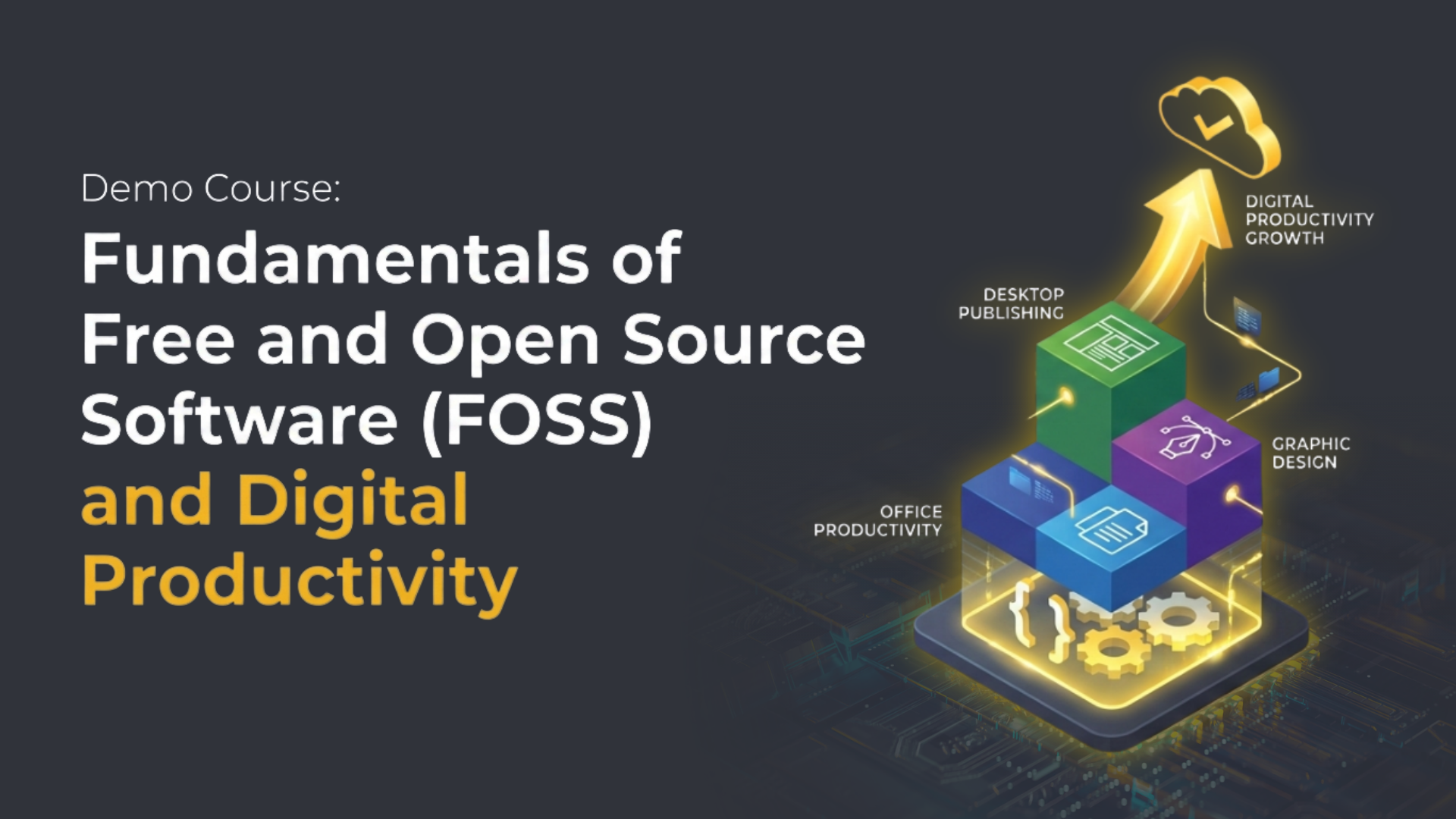
This course provides a theoretical foundation and practical application of Free and Open Source Software (FOSS). Students will examine the ethical, legal, and economic implications of the open-source movement while gaining hands-on proficiency with industry-standard open-source tools for operating systems, office productivity, graphic design, desktop publishing, and learning management.

This course introduces learners to essential concepts in digital citizenship, information and communications technology (ICT), web development, programming, and multimedia design. Students explore responsible online behavior, digital rights and responsibilities, ICT laws, and career opportunities in the technology industry. They develop foundational web development skills using HTML, CSS, and JavaScript, learning how to structure webpages, design layouts, manage data, and create interactive programs through computational thinking and coding practices. Learners also gain hands-on experience in graphic design and video editing by working with digital media tools, image formats, visual design principles, and basic multimedia production techniques. Through practical projects and creative activities, students build technical proficiency, problem-solving abilities, digital literacy, and responsible technology use skills for academic, personal, and future career development.

Get ready to become a digital creator and presentation designer! In this Grade 4 Computer Science course, students develop essential technology skills through computer operation, keyboarding, digital citizenship, and online safety. Learners create and format documents, design engaging presentations, and use multimedia tools to communicate ideas effectively. Students explore presentation software and Canva, using templates, images, animations, charts, and AI-powered features to produce creative digital projects. Through collaboration, sharing, and presentation activities, learners strengthen their creativity, communication, critical thinking, teamwork, and responsible technology use while building confidence with modern productivity and design tools.